|
|
Space Astro
|
Info for exoplanet "Tsuzeka-rimya"
| Scientific (actual) data |
|---|
| Name | UHW J247.95-24.78 |
| Planet status | Confirmed |
| Planet mass | 7.5 |
| Radius | 2.2 |
| Discovered | 2020 |
| Updated | 2025-07-08 |
| Temp calculated | 1900 |
| Temp measured | 1900 |
| Publication | Published in a refereed paper |
| Detection type | Imaging |
| Mass measurement type | Spectrum |
| Radius measurement type | Flux |
| Alternate names | UHW J247.95427-24.78060 |
| Ra | 247.95° |
| Dec | -24.78° |
| Star distance | 145 |
| Wikipedia article | UHW J247.95-24.78 |
Back
| |
| Fictional info (?) |
|---|
| Tsuzeka-rimya |
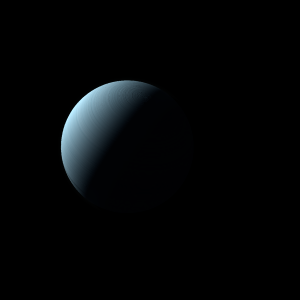
| Large cold gas giant |
| It has the densest atmosphere of the three large cold gas giants, consisting of huge amounts of oxygen.
The volume of water detected has been estimated to be equivalent to the volume of water in Earth's oceans.
The brutal surface is mostly crowded with friendly but shy poisonous herbivores, the "Gyogyoya-won", which survive hidden in craters by hunting a substance called "Poya" at night. Most of them are not similar to the Kyushi but have scales and vary in length from 8 to 10 cm. They are able to live at temperatures from 100 to 140°C and even the acidic environment. |
| 9000000 |
| Atmosphere | Oxygen | 45% |
| Methane | 44% |
| Water | 11% |
| Carbon dioxide | 1.4E-5% |
| 15 bar |
| 4 × Earth |
 |
| No known satellites |
| Google search for Tsuzeka-rimya |
|
Website by Joachim Michaelis
|
|
|
|