|
|
Space Astro
|
Info for exoplanet "Nometar Hianan"
| Scientific (actual) data |
|---|
| Name | TOI-4747 b |
| Planet status | Confirmed |
| Radius | 0.34205 |
| Orbital period | 5.21924 |
| Discovered | 2021 |
| Updated | 2026-03-27 |
| Temperature (kelvin) | 1035 |
| Publication | Announced on a website |
| Detection type | Primary Transit |
| Radius measurement type | Primary Transit |
| Star name | TOI-4747 |
| Right ascension | 86.43° |
| Declination | -45.03° |
| Mag v | 12.4 |
| Star distance | 304.615 |
| Star mass | 1.01 |
| Star radius | 0.988 |
| Star sp type | G3V |
| Star temperature | 5688 |
| Wikipedia article | TOI-4747 b |
Back
| |
| Fictional info (?) |
|---|
| Suggested name | Nometar Hianan |
| Planet type | Cold planet |
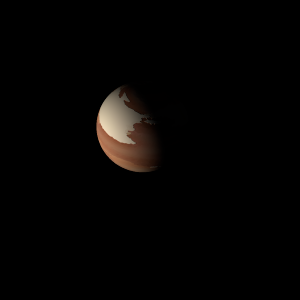
| A prominent result is the "great white spot", a giant storm that is known to have existed for centuries since it was first detected by scanner.
This unpleasant planet is populated by odd interesting bacteria that survive in the forest by hunting another species called Aitdes Cal in the shade. Most Chalyp are related to the Theuste but have scales and vary in length from 40 to 60 mm. The Chalyp are known to withstand temperatures from 90 to 110°C and also high atmospheric pressure. |
| Estimated population | 13000000000 |
| Atmosphere | Carbon dioxide | 89% |
| Oxygen | 11% |
| Water | 0.0022% |
| Methane | 0.00092% |
| Atmospheric pressure | 0.18 bar |
| Gravity | 0 × Earth |
 |
| No known satellites |
| Google search for Nometar hianan |
|
Website by Joachim Michaelis
|
|
|
|