|
|
Space Astro
|
Info for exoplanet "Ferpan Pege"
| Scientific (actual) data |
|---|
| Name | TOI-2179 b |
| Planet status | Confirmed |
| Planet mass | 1.942 |
| Radius | 1.117 |
| Orbital period | 15.1689 |
| Semi major axis | 0.1207 |
| Orbit eccentricity | 0.575 |
| Inclination | 87 |
| Discovered | 2020 |
| Updated | 2026-03-29 |
| Omega | 24.1 |
| Tzero tr | 2458320 |
| Impact parameter | 0.9 |
| K | 191.3 |
| Temperature (kelvin) | 974 |
| Publication | Published in a refereed paper |
| Detection type | Primary Transit |
| Mass measurement type | Radial Velocity |
| Radius measurement type | Primary Transit |
| Alternate names | TIC 237913194 b |
| Star name | TOI-2179 |
| Right ascension | 22.45° |
| Declination | -60.74° |
| Star distance | 309.6 |
| Star metallicity | 0.14 |
| Star mass | 1.026 |
| Star radius | 1.088 |
| Star sp type | G2V |
| Star age | 5.7 |
| Star temperature | 5788 |
| Star alternate names | TIC 237913194 |
| Wikipedia article | TOI-2179 b |
Back
| |
| Fictional info (?) |
|---|
| Suggested name | Ferpan Pege |
| Planet type | Terrestrial |
| It was the one of the first exoplanets visited by a spacecraft, and one of the first to be successfully landed on.
The outer atmosphere is visibly segregated into several bands at different latitudes, resulting in turbulence and storms along their interacting boundaries.
Its north and south poles, therefore, lie where most other planets have their equators. |
| Atmosphere | Ammonium hydrosulfide (NH4SH) | 51% |
| Carbon dioxide | 49% |
| Carbon monoxide | 0.052% |
| Nitric oxide | 0.0015% |
| Atmospheric pressure | 0.006 bar |
| Gravity | 4 × Earth |
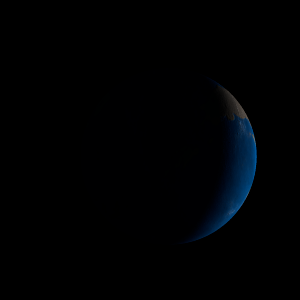 |
| No known satellites |
| Google search for Ferpan pege |
|
Website by Joachim Michaelis
|
|
|
|