|
|
Space Astro
|
Info for exoplanet "Xibehec"
| Scientific (actual) data |
|---|
| Name | TOI-2040 b |
| Planet status | Confirmed |
| Planet mass | 0.78 |
| Radius | 0.92 |
| Orbital period | 3.86086 |
| Semi major axis | 0.0473 |
| Orbit eccentricity | 0.1 |
| Inclination | 88.5 |
| Discovered | 2020 |
| Updated | 2026-07-05 |
| Omega | 11 |
| Tzero tr | 2459740 |
| Impact parameter | 0.3 |
| K | 107.5 |
| Temperature (kelvin) | 1070 |
| Publication | Published in a refereed paper |
| Detection type | Primary Transit |
| Mass measurement type | Radial Velocity |
| Radius measurement type | Primary Transit |
| Star name | TOI-2040 |
| Right ascension | 352.28° |
| Declination | 71.51° |
| Mag v | 11.5 |
| Star distance | 146.3 |
| Star metallicity | 0.3 |
| Star mass | 0.92 |
| Star radius | 0.87 |
| Star sp type | G6V |
| Star age | 8.7 |
| Star temperature | 5486 |
| Star alternate names | TYC 4486-00471-1 |
| Wikipedia article | TOI-2040 b |
Back
| |
| Fictional info (?) |
|---|
| Suggested name | Xibehec |
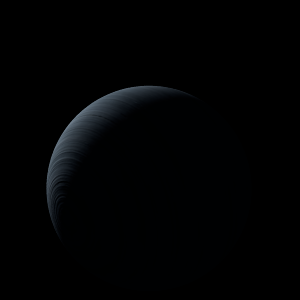
| Planet type | Hot gas giant |
| It is the coldest planetary atmosphere in its solar system, with a minimum temperature of 83°K (-190°C), and has a complex, layered cloud structure with ozone thought to make up the lowest clouds, and water vapor the uppermost layer of clouds.
The molecular hydrogen has probably photodissociated, and the free water vapor has been swept into interplanetary space by the solar wind because of the lack of a planetary magnetic field. |
| Atmosphere | Water vapor | 75% |
| Ozone | 17% |
| Molecular hydrogen | 4.9% |
| Carbon dioxide | 1.5% |
| Carbonyl sulfide | 1% |
| Hydrogen deuteride (HD) | 0.014% |
| Atmospheric pressure | 1.5 bar |
| Gravity | 2.4 × Earth |
 |
| No known satellites |
| Google search for Xibehec |
|
Website by Joachim Michaelis
|
|
|
|