|
|
Space Astro
|
Info for exoplanet "Wogyu Gyo"
| Scientific (actual) data |
|---|
| Name | TOI-1775 b |
| Planet status | Confirmed |
| Planet mass | 0.302 |
| Radius | 0.776 |
| Orbital period | 10.2406 |
| Semi major axis | 0.082 |
| Discovered | 2024 |
| Updated | 2024-08-16 |
| Tzero tr | 2458880 |
| K | 29.8 |
| Temp calculated | 760 |
| Publication | Published in a refereed paper |
| Detection type | Primary Transit |
| Mass measurement type | Radial Velocity |
| Radius measurement type | Primary Transit |
| Star name | TOI-1775 |
| Ra | 150.12° |
| Dec | 39.46° |
| Star distance | 149.23 |
| Star mass | 0.9 |
| Star radius | 0.84 |
| Star temperature | 5251 |
| Wikipedia article | TOI-1775 b |
Back
| |
| Fictional info (?) |
|---|
| Wogyu Gyo |
| Warm gas giant |
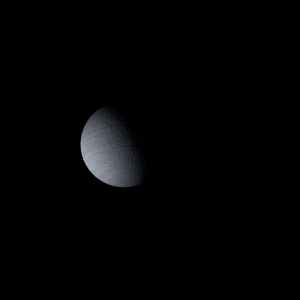
| The planet telescopically displays the complete range of phases, similar to Venus and the Moon, as it moves in its inner orbit relative to TOI-1775, which reoccurs over the so-called synodic period approximately every 93 days.
Having almost no atmosphere to retain heat, it has surface temperatures that vary diurnally more than on any other planet in its solar system, ranging from 130°K (-143°C) at night to 1015°K (742°C) during the day across the equatorial regions. |
| Atmosphere | Ethane | 62% |
| Carbon monoxide | 36% |
| Nitric oxide | 1.5% |
| Ammonium hydrosulfide (NH4SH) | 0.033% |
| 0.019 bar |
| 1.3 × Earth |
 |
| No known satellites |
| Google search for Wogyu gyo |
|
Website by Joachim Michaelis
|
|
|
|