|
|
Space Astro
|
Info for exoplanet "Nyopyoze Fu"
| Scientific (actual) data |
|---|
| Name | TOI-1291 b |
| Planet status | Confirmed |
| Radius | 0.45089 |
| Orbital period | 7.16199 |
| Discovered | 2019 |
| Updated | 2026-03-27 |
| Temperature (kelvin) | 1649 |
| Publication | Announced on a website |
| Detection type | Primary Transit |
| Radius measurement type | Primary Transit |
| Star name | TOI-1291 |
| Right ascension | 245.82° |
| Declination | 62.93° |
| Mag v | 11.5 |
| Star distance | 428.123 |
| Star mass | 1.2 |
| Star radius | 1.81 |
| Star sp type | F8IV |
| Star temperature | 6230 |
| Star alternate names | TIC 198186769 |
| Wikipedia article | TOI-1291 b |
Back
| |
| Fictional info (?) |
|---|
| Suggested name | Nyopyoze Fu |
| Planet type | Cold planet |
| It was the one of the first exoplanets visited by a spacecraft, and one of the first to be successfully landed on.
problematic voyage.
The largest moon is crawling with barbaric and ultra advanced oceanic life, the "Hyochu Pyogya", that feed on the ground by hunting the Goizohyu plant in the shade. Hyochu Pyogya are somewhat related to the Nyomoki Ro but have 8 tentacles and vary in size from 3 to 3 mm. Hyochu Pyogya are able to reproduce at temperatures from 130 to 200°C and even intense weather which is common near the poles. |
| Estimated population | 70000000000 |
| Atmosphere | Carbon dioxide | 93% |
| Methane | 3.8% |
| Oxygen | 3% |
| Water | 0.0054% |
| Atmospheric pressure | 20 bar |
| Gravity | 0 × Earth |
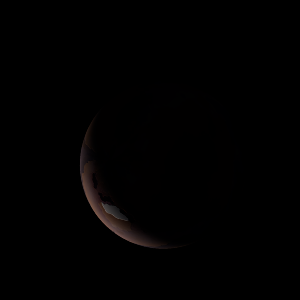 |
| Moon | Toyo | Large round oceanic asteroid |
| Google search for Nyopyoze fu |
|
Website by Joachim Michaelis
|
|
|
|