|
|
Space Astro
|
Info for exoplanet "Chebia"
| Scientific (actual) data |
|---|
| Name | KMT-2021-BLG-1063 b |
| Planet status | Confirmed |
| Planet mass | 0.29 |
| Semi major axis | 1.74 |
| Discovered | 2026 |
| Updated | 2026-05-19 |
| Publication | Published in a refereed paper |
| Detection type | Microlensing |
| Mass measurement type | Microlensing |
| Star name | KMT-2021-BLG-1063 |
| Right ascension | 267.41° |
| Declination | -29.55° |
| Star distance | 6707 |
| Star mass | 0.416 |
| Wikipedia article | KMT-2021-BLG-1063 b |
Back
| |
| Fictional info (?) |
|---|
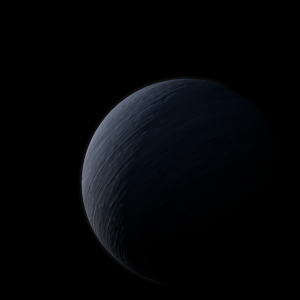
| Suggested name | Chebia |
| Planet type | Cold gas giant |
| It has the longest rotation period (445 days) of any planet in its solar system and rotates in the opposite direction to most other planets.
challenging ride.
Wind speeds can reach 86 metres per second. |
| Atmosphere | Formaldehyde | 98% |
| Water vapor | 0.73% |
| Hydrogen | 0.18% |
| Ammonium hydrosulfide (NH4SH) | 0.15% |
| Neon | 0.0037% |
| Nitric oxide | 0.00032% |
| Krypton | 1.0E-6% |
| Atmospheric pressure | 0.17 bar |
 |
| Moon | Nyel'thrymr | Small round ice asteroid |
| Google search for Chebia |
|
Website by Joachim Michaelis
|
|
|
|