|
|
Space Astro
|
Info for exoplanet "Thevos-cathy"
| Scientific (actual) data |
|---|
| Name | [DRS2009] 1948 |
| Planet status | Confirmed |
| Planet mass | 35.1 |
| Discovered | 1997 |
| Updated | 2025-11-25 |
| Temperature (kelvin) | 2649 |
| Publication | Published in a refereed paper |
| Detection type | Imaging |
| Mass measurement type | Spectrum |
| Right ascension | 83.79° |
| Declination | -5.52° |
| Star distance | 414 |
| Wikipedia article | [DRS2009] 1948 |
Back
| |
| Fictional info (?) |
|---|
| Suggested name | Thevos-cathy |
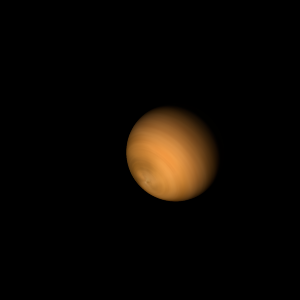
| Planet type | Huge cold gas giant |
| The nitrogen has probably photodissociated, and the free nitric oxide has been swept into interplanetary space by the solar wind because of the lack of a planetary magnetic field.
The smooth Borealis basin in the northern hemisphere covers 20 percent of the planet and may be a giant impact feature.
A prominent result is the "great white spot", a giant storm that is known to have existed for centuries since it was first observed by radar.
lengthy ride. |
| Atmosphere | Nitric oxide | 43% |
| Oxygen | 26% |
| Nitrogen | 21% |
| Ammonia | 5.5% |
| Neon | 4.1% |
| Hydrogen deuteride (HD) | 0.75% |
| Formaldehyde | 0.18% |
| Ozone | 0.002% |
| Atmospheric pressure | 0.0019 bar |
 |
| No known satellites |
| Google search for Thevos-cathy |
|
Website by Joachim Michaelis
|
|
|
|